Ice Cream Sundae Embroidery Design
A Sweet Spot for Handmade Charm — Tested on a Summer Tote Bag
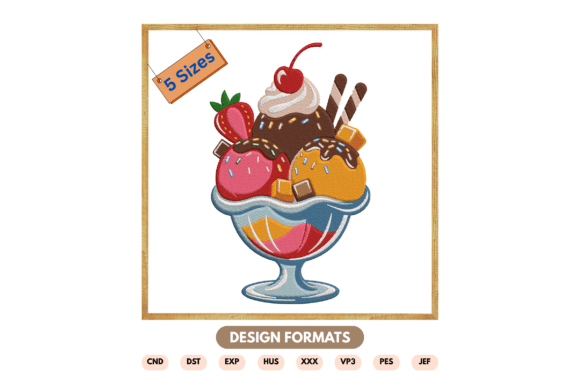
Let’s be real: not every food-themed machine embroidery design holds up when stitched on a real tote bag meant for farmers’ markets, kids’ lunchboxes, or boutique gift wrapping. I recently pulled the Ice Cream Sundae Embroidery Design into my workspace to test it on a medium-weight cotton canvas tote — the kind that sells fast at local craft fairs and gets tagged in Instagram stories by happy customers. First impression? It lands with cheerful confidence. The layout is balanced but playful — no awkward stretching or visual crowding. That bowl sits just right, scoops have gentle dimension, and the chocolate drizzle isn’t lost in fill stitch noise. It feels like dessert you’d want to hold, not just admire.
Where This Design Truly Shines
The Ice Cream Sundae Embroidery Design belongs in projects where joy and recognizability matter most. Think embroidered baby onesies (paired with soft pastel thread), kitchen tea towels for a small-batch bakery, or sweatshirt cuffs for a summer camp merch line. As an embroidered patch, it holds up beautifully — the sprinkles read clearly even at 2.5 inches wide, and the wafer sticks retain crisp edges without over-stitching. For custom apparel, it works best on relaxed-fit items: a linen apron, a unisex crewneck, or a canvas backpack panel. On those surfaces, the design breathes. It doesn’t fight the fabric — it partners with it.
- Tote bag design: Perfect center-front placement; reads well from 3+ feet away
- Baby embroidery: Soft color palette translates easily to ecru or mint fabric
- Holiday embroidery: Surprisingly versatile for July 4th picnics or birthday party favors
- Etsy seller asset: Stands out in thumbnails and pairs well with printable mockups
- Craft business product: Adds handmade warmth without looking overly fussy or juvenile
Where to Pause — Real Fabric Realities
This isn’t a “stitch-and-forget” file. The Ice Cream Sundae Embroidery Design includes fine details — tiny sprinkles, delicate drizzle lines, subtle texture in the ice cream scoops — that demand attention before going live. On thin fabric like rayon challis or lightweight voile, I recommend testing with tear-away + light cutaway stabilizer. Without it, the chocolate drizzle can blur into a muddy brown blob. On stretchy fabric (think ribbed knit baby caps), skip the design unless you’re willing to hoop tightly and use adhesive-backed stabilizer — otherwise, those wafer sticks warp sideways.
Dark fabric? Yes — but only if your thread colors are saturated enough. A pale yellow scoop on navy won’t pop. Test it in black-and-white mockups first. Curved surfaces like baseball caps? Possible, but only in the front panel’s flatter zone — avoid the crown curve where the bowl shape distorts. And don’t force it into a 3-inch hoop unless the vendor confirms a reduced-size version exists. Crowding those sprinkles kills readability.
What It Does for Your Brand and Buyer Trust
When customers see a well-executed Ice Cream Sundae Embroidery Design on a finished product, they register three things instantly: care, clarity, and charm. That matters more than we admit. A sloppy sundae reads as rushed — a crisp one says, “This was chosen, tested, and stitched with intention.” For Etsy sellers, that translates directly to fewer returns and more repeat buyers. For small shop owners, it elevates shelf presence next to mass-produced prints. Even in digital form, this digital embroidery file supports strong branding — its consistent proportions and clean negative space make it easy to pair with simple fonts or minimalist packaging.
It also avoids the “cute overload” trap. Unlike some food-themed designs that lean cartoonish or cluttered, this one keeps breathing room. That helps maintain brand consistency whether you’re stitching for a gourmet ice cream truck or a pediatrician’s waiting room pillow cover.
Practical Designer Notes — Before You Stitch
- Always test on scrap fabric — especially with your exact thread brand and needle type
- Review stitch density — dense fills can stiffen lightweight fabrics; adjust if needed
- Confirm hoop size compatibility — check file metadata or vendor specs before hooping
- Inspect small details — zoom in on sprinkles and drizzle lines in your embroidery software
- Try black-and-white mockups — reveals contrast issues before thread is cut
- Compare light vs. dark backgrounds — same design, different emotional impact
- Use proper stabilizer — medium cutaway for knits, tear-away for stable wovens
- Verify licensing — confirm whether the embroidery file permits commercial use for finished products or resale as digital assets
Final Thought: Not Just Dessert — It’s a Delivery Vehicle for Delight
The Ice Cream Sundae Embroidery Design isn’t about replicating dessert. It’s about delivering delight through thoughtful execution. When stitched well, it turns a plain tote into a conversation starter, a baby onesie into a keepsake, and a small shop’s holiday gift into something memorable. It respects the craft — no unnecessary satin stitch overkill, no confusing layer order, no hidden density traps. As a working designer and embroidery product reviewer, I’ve seen dozens of food-themed files fall short on clarity or wearability. This one doesn’t. It’s ready — not for the shelf, but for the stitch.