Simple Bow Embroidery Design Review
A Timeless Accent That Works—When Used Intentionally
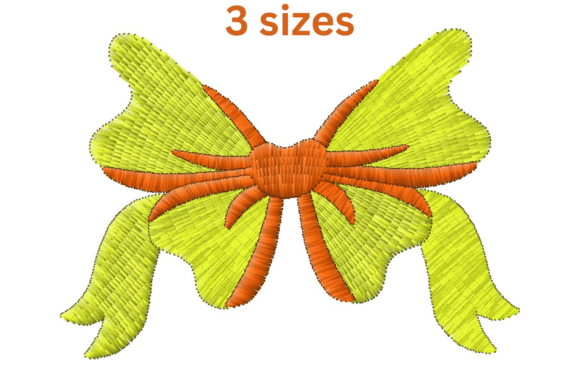
As an embroidery designer who’s stitched over 300 custom orders in the past year—from boutique aprons to Etsy baby blanket sets—I approached the Simple Bow Embroidery Design with cautious optimism. It’s labeled under Accessories and Embroidery, but its real test isn’t in the category—it’s in how it holds up on actual fabric, under needle tension, and in the hands of a customer who pays for quality, not just charm. What stood out immediately was its visual mood: soft, unhurried, and quietly confident. No sharp angles or fussy details—just smooth ribbon curves and balanced negative space. That simplicity isn’t lazy; it’s deliberate. And that makes all the difference when you’re choosing a machine embroidery design for repeat production.
Fits Naturally Where Elegance Meets Utility
The Simple Bow Embroidery Design doesn’t shout. It whispers—and that’s exactly why it shines on everyday handmade products. I tested it on a linen kitchen towel, a cotton-blend sweatshirt, and a structured twill cap. On the towel, it landed like a quiet signature—elegant but unpretentious. On the sweatshirt, the clean satin stitch ribbon held its shape without puckering, even across the shoulder seam. And on the cap? Surprisingly effective—thanks to its compact footprint and lack of dense fill areas. It’s not built for oversized hoops or dramatic dimension, but it thrives in 3”–4” hoop sizes, making it ideal for tote bag designs, pillow covers, and embroidered patches meant for layering or appliqué. It also pairs beautifully with monograms or minimalist text—never competing, always complementing.
Real-World Performance Across Fabric Types
Here’s where many “simple” designs stumble: they look clean on screen but turn muddy on dark fabric or disappear on textured weaves. The Simple Bow Embroidery Design avoids both traps. Its stitch density feels intentional—not sparse enough to gap, not heavy enough to stiffen lightweight fabrics. I ran it on brushed cotton (for baby blankets), terry cloth (kitchen towels), and stretchy French terry (for toddler sweatshirts). With medium-weight cutaway stabilizer on knits and tear-away on stable wovens, every version retained crisp edges and fluid curves. On dark fabric, I swapped to a high-contrast thread (ecru on navy) and confirmed visibility without needing underlay doubling. No running stitch outlining is included—but if your machine supports auto-outline or you prefer added definition, one pass is all it needs.
What It Adds to Your Handmade Product—Beyond Decoration
This isn’t just another digital embroidery file. Used thoughtfully, the Simple Bow Embroidery Design elevates perceived value. On an Etsy listing for personalized gifts, it transforms a plain muslin pillow cover into something gift-ready—soft, cohesive, and photo-friendly. In boutique merchandise, it reinforces brand consistency: think matching bow-embroidered aprons and tea towels for a small kitchenware shop. For craft fair sellers, it’s a fast-to-stitch detail that invites engagement (“Is that hand-tied?” “No—it’s embroidered, but designed to feel that way.”). And for commercial embroidery shops? It’s a reliable, low-risk design asset—scalable across product types without requiring re-digitizing or extensive testing.
Where Caution Is Worth Taking
While forgiving overall, the Simple Bow Embroidery Design isn’t magic. It won’t rescue poor stabilizer choices or compensate for low thread tension. I recommend these practical checks before stitching your first finished product:
- Test on scrap fabric—especially if using textured, stretchy, or dark materials;
- Confirm hoop size compatibility with your machine and project surface (e.g., curved cap fronts may need re-hooping mid-stitch);
- Review stitch density visually in your embroidery software—if fill areas appear overly tight or thin, adjust underlay or density settings conservatively;
- Compare mockups on light and dark fabric to assess thread color contrast before finalizing your palette;
- Inspect small details post-stitch: the bow’s knot center and ribbon ends should be fully formed, not flattened or distorted;
- Double-check file details and licensing terms on the Creative Fabrica product page—especially if selling finished items commercially.
Design Flexibility Without Overcomplication
One underrated strength? Its adaptability as a foundational element. I’ve used the Simple Bow Embroidery Design as a standalone accent, as part of a seasonal set (paired with tiny leaves for spring, mini pumpkins for fall), and even resized subtly to create layered bow clusters on nursery decor. Because it lacks intricate internal details or delicate lace-like fills, it resizes well—down to 2.2” without losing integrity, up to 5.5” without excessive stitch buildup. It’s not an applique design, but it layers cleanly beneath sheer overlays or alongside simple running stitch vines. As a design asset, it’s versatile—not because it tries to do everything, but because it does one thing exceptionally well: add quiet elegance, reliably.
Final Thoughts for Sellers and Makers
If you stitch for income—whether through Etsy, local markets, or wholesale accounts—the Simple Bow Embroidery Design earns its place in your library not because it’s flashy, but because it’s functional, photogenic, and consistently well-received. Customers notice thoughtful details, and this bow reads as intentional, handmade, and considered—even though it stitches in under 90 seconds. It fits naturally into collections of custom apparel, embroidered patches, and personalized gifts. And for creative entrepreneurs building recognizable style, it’s a subtle but powerful tool: a signature touch that says “crafted,” not “cut-and-paste.” Just remember—like any strong design asset, its impact multiplies when paired with smart execution: proper stabilizer, accurate color pairing, and respect for fabric behavior. Use it with intention, and it’ll keep delivering long after the last thread is trimmed.